Amirali Aghazadeh

Coda S1209
Tech Square
Atlanta, GA 30308
I am an Assistant Professor in the School of Electrical and Computer Engineering at the Georgia Institute of Technology. I serve as Program Faculty in the Ph.D. programs in Machine Learning, Bioinformatics, and Bioengineering, and am affiliated with IDEaS, IMS, SRI, and the Petit Institute for Bioengineering and Bioscience (IBB).
Prior to joining Georgia Tech, I was a postdoctoral researcher at Stanford and UC Berkeley, and earned my Ph.D. from Rice University.
I am broadly interested in machine learning and AI for scientific discovery, with a focus on developing scalable methods for learning, generation, interpretation, and reasoning in complex combinatorial design spaces. Recent interests are:
- Discrete generative and diffusion models
- Protein sequence–function modeling, representation learning, and design
- Mechanistic interpretability
- Agentic AI, safety, and biosecurity
- Computational methods for protein imaging: cryo-EM
- Automated discovery in chemistry and the origins of life
I pronounce my first name Ah-meer-ah-lee and my last name Ah-gah-zah-deh.
- Watch my talk on Mech Interp of pLMs: Adaptable Computing for Omics.
- Watch my talk on Agentic AI for Hypothesis Generation: ICLR Agentic AI Workshop.
- Watch my talk on Epistasis and Protein Fitness Modeling at the Broad Institute: Models, Inference, and Algorithms (MIA).
news
| Sep 25, 2026 | Congrats to William for his paper on error correction in discrete diffusion accepted at NeurIPS 2026! |
|---|---|
| Aug 21, 2026 | New paper accepted as an Oral at MLCB 2026! We introduce function-aware masking for learning task-specific representations in antibody language models, more here. |
| Jul 17, 2026 | Grateful that our project has been selected for the Anthropic AI for Science program to support our work on automating discovery in protein language models. |
| Jul 10, 2026 | I received the Foresight Institute AI for Science & Safety Nodes grant and will participate in its community of researchers advancing AI-enabled science and safety. |
| Jun 14, 2026 | Excited that two papers from the group have been accepted to the ICML26 Mechanistic Interpretability Workshop! |
selected publications
-
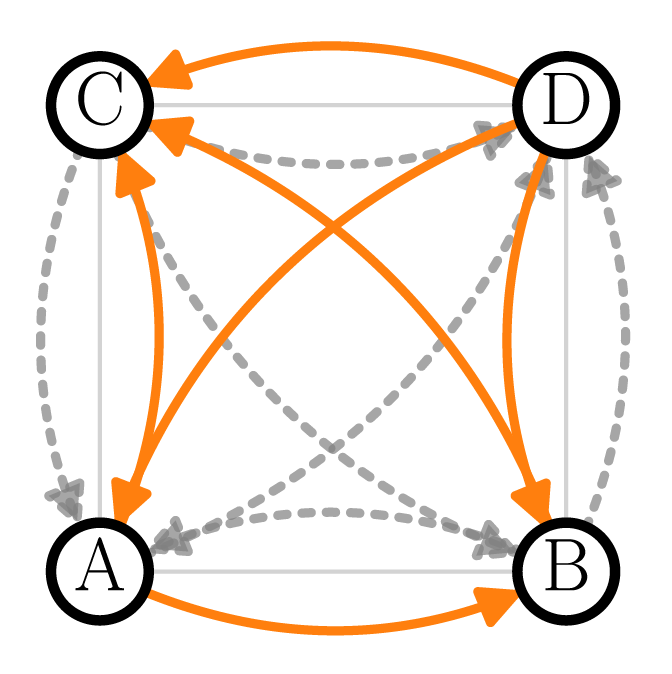 On the Error-Correcting Effects of Stochasticity in Discrete DiffusionConference on Neural Information Processing Systems (NeurIPS), 2026
 -
 Thinking microscopes: agentic AI and the future of electron microscopynpj Computational Materials, 2026


